

How to Choose an NDIS Support Worker Who Is Right for You
Updated: Sep 18
Finding an NDIS support worker is about finding someone coming into your home every week, helping with personal care, taking you to appointments or spending several hours with you in the community.
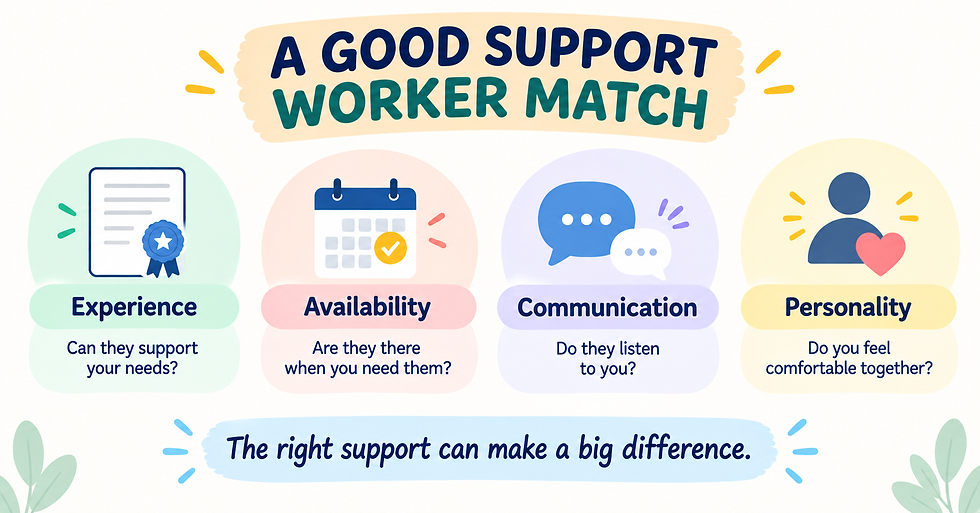
So experience matters. But so do personality, reliability and whether you actually feel comfortable with the person. Here are a few practical things to consider before you decide.

Start with the Support You Actually Need
Before looking for a worker, be clear about what you need help with. Think about the practical details too:
What days and times do you need support?
Where will the support take place?
Do you need someone with particular experience?
Do you prefer a male or female worker?
Does language or cultural understanding matter to you?
What kind of personality would you feel comfortable with?
Experience Matters — But So Does the Right Match
A worker can look perfect on paper and still not be the right person for you.
At Joystep, we see this when matching workers with participants. A participant might initially ask for a female worker with several years of experience. Once we talk further, we may find that what really matters is having someone mature, calm and patient. Another participant may care less about age and place much more importance on having someone who speaks their preferred language.

Ask Practical Questions Before You Start
You don't need to turn your first conversation into a formal job interview. But there are a few things worth asking.
What experience do you have with the support I need?
Be specific. If you need personal care, mobility assistance or support with particular disability-related needs, ask about that experience rather than simply asking, “How long have you worked in disability support?”
Are you available when I actually need support?
A great worker isn't much help if you need someone every Tuesday morning and they're only available on Fridays. Consistency can be particularly important if the worker helps with your morning routine, regular appointments or weekly activities.
What happens if you're sick or away?
If you're working through a provider, ask whether another suitable worker can be arranged.
Check the Basics Too
Personality matters, but safety does too.
The NDIS recommends checking that support workers have completed an NDIS Worker Screening Check, which assesses whether someone is suitable to work with people with disability. If you're using a provider, you can also ask about their worker screening, training and how they manage incidents or complaints.
Before regular support begins, make sure you understand the service agreement as well — particularly the services, fees, cancellation arrangements and how either side can end the agreement. The NDIS recommends having a service agreement so both you and your provider understand what has been agreed.
Pay Attention to the First Few Shifts
You don't always know whether someone is the right fit after one conversation.
The first few shifts can tell you much more.
Do they arrive when agreed?
Do they listen before jumping in to help?
Do they remember how you like things done?
Do they talk with you, rather than only talking to your family?
Do you feel comfortable having them in your home or spending time with them?
What If the Support Worker Isn't the Right Fit?
Sometimes nothing has gone particularly wrong. The worker may be reliable and experienced, but you simply don't feel comfortable together.
That's a valid reason to talk to your provider.
At Joystep, we'd rather know early if a match isn't working. Sometimes adjusting the routine or communication is enough. Other times, finding a different worker makes more sense.
NDIS participants have choice over who they work with and when they receive their supports.
We consider support needs, availability, location, experience, personality, language and personal preferences when matching participants with support workers.

Comments